



Learning Research & Science
Insights culled from analysis and inquiry that keep learning professionals up-to-date on how people learn, technologies, approaches, and performance improvement practices.
-

Research Spotlight: Next Generation of Asynchronous Authoring Tools
In October 2013, The eLearning Guild published a comprehensive research report on asynchronous authoring tools. Now we present our 2017 report, which provides major updates on the impact of technologies not widely used back in 2013, as well as functional requirements for authoring tool selection and additional features essential in today’s asynchronous authoring environment.
By Sharon Vipond • -
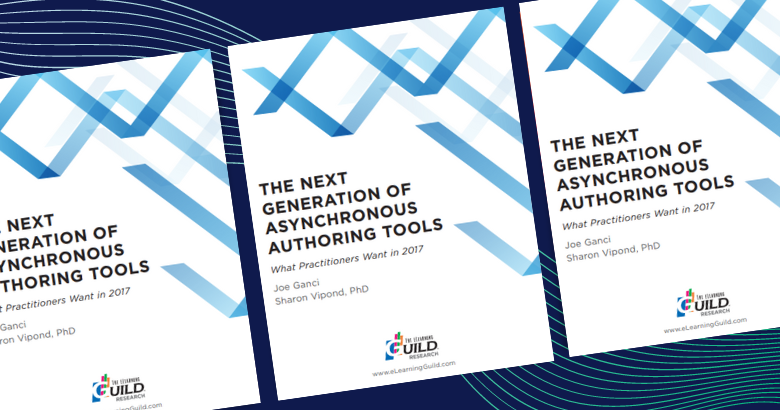
The Next Generation of Asynchronous Authoring Tools: What Practitioners Want in 2017
This research report details which features and functions are most desired by authoring tool practitioners, explores the characteristics of practitioners, and presents their input on the next generation of authoring tools.
By Joe Ganci, Sharon Vipond • -

Is Media Multitasking a Myth?
Many learners believe that they are good at multitasking; even more believe that they successfully “media multitask”—simultaneously process multiple streams of media information. Do they? Research indicates that they do not.
By Pamela Hogle • -

The Mandela Effect in Your Learning
Have you ever had a clear memory of something that didn’t happen? Does this concept happen in today’s training? Do a significant number of your learners have some wrong information? If so, you may be fighting the Mandela Effect.
By Phil Cowcill • -

Learning Leader Julie Dirksen Advises: Diagnose the Problem Before Turning to Training
If training fails to change employees’ behavior, the problem might not be a training issue. Diagnosing the problem is essential to creating lasting behavior change.
By Pamela Hogle • -

Digital Readiness Gap Could Be More Significant than Digital Divide
A study of digital readiness suggests that familiarity with concepts and innovations in eLearning might be more important than access to tools and technology in preparing learners to engage in eLearning.
By Pamela Hogle • -

Knowledge Science: The Great Big Beautiful Puzzle
What is fascinating about knowledge, and learning, is that it is massively expansive and intricately interconnected. One idea always relates to another idea. It is the ultimate puzzle. People are naturally motivated to learn and grow because, in the end, our lives and lifestyles depend upon it. Yet organizational cultures and technology work against this innate motivation. Here’s why.
By Dennis Thomas • -

Research Spotlight: Women in eLearning: Continuing the Conversation
The eLearning Guild’s latest white paper delivers the most recent research on women in eLearning and provides a framework for launching additional Guild-sponsored conversations on this topic during 2017. It also provides a snapshot of 2017 salary survey data that helps us better understand what we know about women in the field, and an updated assessment of “where we are now.”
-

Gamification and Evidence-Based Practice
What do we know about the effectiveness of gamification? We know that it depends on the type and design of the game, the instructional goal, and the learner’s background. In a series of experiments detailed in the new fourth edition of e-Learning and the Science of Instruction, Richard Mayer has identified several factors that lead to better learning from games.
By Ruth Clark • -

Women in eLearning: Continuing the Conversation
This white paper, Women in eLearning: Continuing the Conversation, explores the important topic of women in eLearning and discusses what we can do to help eliminate gender bias in eLearning.
By Julie Dirksen, Sharon Vipond •