


Organizational Learning Strategies
Organizations are shifting from episodic training to continuous capability building, embedding learning into the flow of work to drive adaptability, resilience, and strategic growth.
-
From Course Delivery to Learning Ecosystems: An AI-Driven Approach
Whether you’re looking to enhance efficiency or future-proof your L&D strategy, this session offers a practical roadmap for leveraging AI in your learning environment.
-
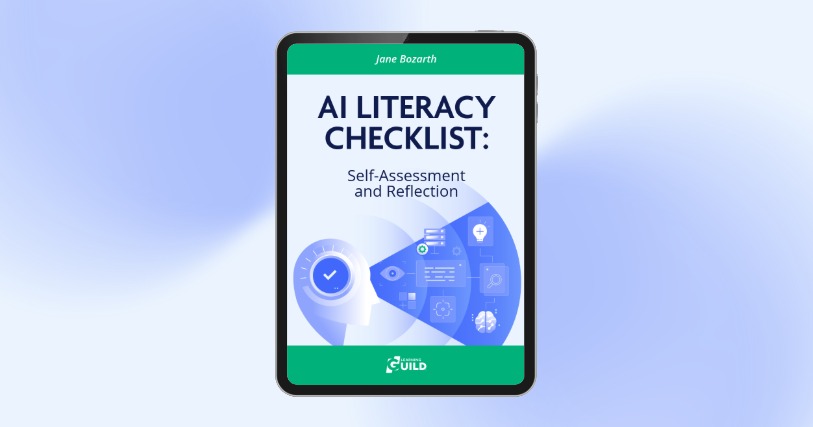
The AI Literacy Checklist: Self-Assessment and Reflection
This AI Literacy Checklist is designed to help you develop the essential knowledge and critical skills needed to confidently navigate the rapidly changing world of AI.
-

Creating a Culture of Learning to Retain & Grow Early-Career Talent
In the era of emerging new technologies, organizations need to create, develop, and retain their workforce, especially early-career professionals, to match the growing demands of the customers.
-

Beyond Knowledge: Evaluating Training Programs for Real-World Impact
In this session, we explore strategies for collecting data and assessing effectiveness across many industries. Real-world case studies will illuminate how meaningful evaluation drives business outcomes, while hands-on activities will guide attendees in crafting actionable, impact-focused evaluation plans tailored to their unique needs.
-
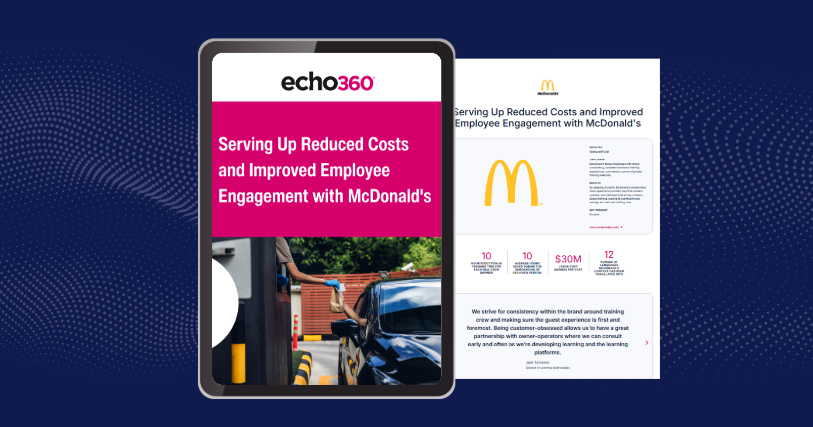
Serving Up Reduced Costs and Improved Employee Engagement with McDonald’s
Check out this eBook to learn how McDonald’s achieved all of these improvements, and continues to deliver scalable, engaging training that meets the evolving needs of its workforce.
-

Beyond Knowledge: Embedding Behavioral Change in Professional Development
Traditional professional development often focuses on delivering content, yet real impact comes from behavioral transformation. This session explores how learning design, neuroscience, and behavioral science can reshape professional development to create lasting change in workplace learning.
-
Changing Mindsets! Replacing Teach-and-Quiz with Contextual Learning
Think about something you do exceptionally well at your job. How did you learn it? Chances are, you didn’t master that skill by attending a class, completing an online module, or passing a quiz. Instead, you probably learned by doing, making mistakes, receiving feedback, and improving as you solved real-life problems. In this session, Dr. Cristina Wildermuth and Kasper Spiro introduce the Contextual Learning Model and show how L&D professionals can lead mindset shifts and empower employees to teach through real-world problem-solving.
-
How “Learning in the Flow of Work” Works
Learning professionals are well aware that people learn while doing their jobs, and “learning in the flow of work” is the primary stream of development for many roles and sophisticated skills. This session will explore the dynamics of these kinds of in-the-flow-of-work development activities, what makes them work, and how L&D can support people in effectively engaging in them.
-
Transforming Learning with Impact: Designing Engaging and Adaptive Experiences
Many onboarding, HR essentials, skill-based training, and online courses fail to provide opportunities for learners to apply the knowledge and skills in their actual work environments. Learners frequently feel disengaged, overwhelmed, or trapped in a cycle of passive content consumption with few meaningful takeaways. This session introduces three evidence-based approaches to bridge this gap and ensure learning translates into practice.
-
Using the Learning Sciences to Gain a Competitive Advantage
As an industry, we are now committed to the learning sciences, but still, we do not always feel empowered to maximize learning results. We yearn to partner more fully with our organization’s senior leadership “to get a seat at the table,” but we don’t always speak their language, and they don’t always see how our work impacts organizational success. We need a new vocabulary and a new way of framing our strategic importance. Enter “Competitive Advantage.” By striving for competitive advantage, we can empower ourselves and simultaneously connect with the language of business.